Notice: 函数 WP_Styles::add 的调用方法不正确。 The style with the handle "storefront-woocommerce-style" was enqueued with dependencies that are not registered: storefront-style. 请查阅调试 WordPress来获取更多信息。 (这个消息是在 6.9.1 版本添加的。) in /wordpress/wp-includes/functions.php on line 6260

KB-1336

1K17044-hIgG1

Home » Antibodies » 1K17044-hIgG1

Background of 1K17044-hIgG1

CCR8 is a member of the chemokine receptor family and functions as a G-protein coupled receptor. Extensive research has revealed that CCR8 exhibits specific expression on regulatory T cells (Treg) infiltrating tumors, as well as on Th2 cells and tumor cells. The monoclonal antibody 1K17044-hIgG1, currently under development as an anti-CCR8 therapeutic, has demonstrated the capacity to induce discernible depletion of CCR8+ Treg cells in human tumor explants. This CCR8+ Treg depletion has translated into robust antitumor activity when administered as a standalone treatment and in combination with anti-PD-1 therapy in murine tumor models. These findings provide substantial support for further clinical exploration of CCR8 depletion, especially in conjunction with immune checkpoint blockade, as an innovative approach to cancer immunotherapy.

Specifications

Catalog Number:
KB-1336
Antibody Name:
1K17044-hIgG1
Isotype:
Human IgG1,kappa
FC Muations:
Target:
CCR8
Species Reactivity:
Human
Host Cell Line:
EXPI CHO
Purification Method:
Affinity purified
Concentration:
>2 mg/mL
Formulation:
50 mM sodium citrate,150mM NaCl,pH5.5
Purity:
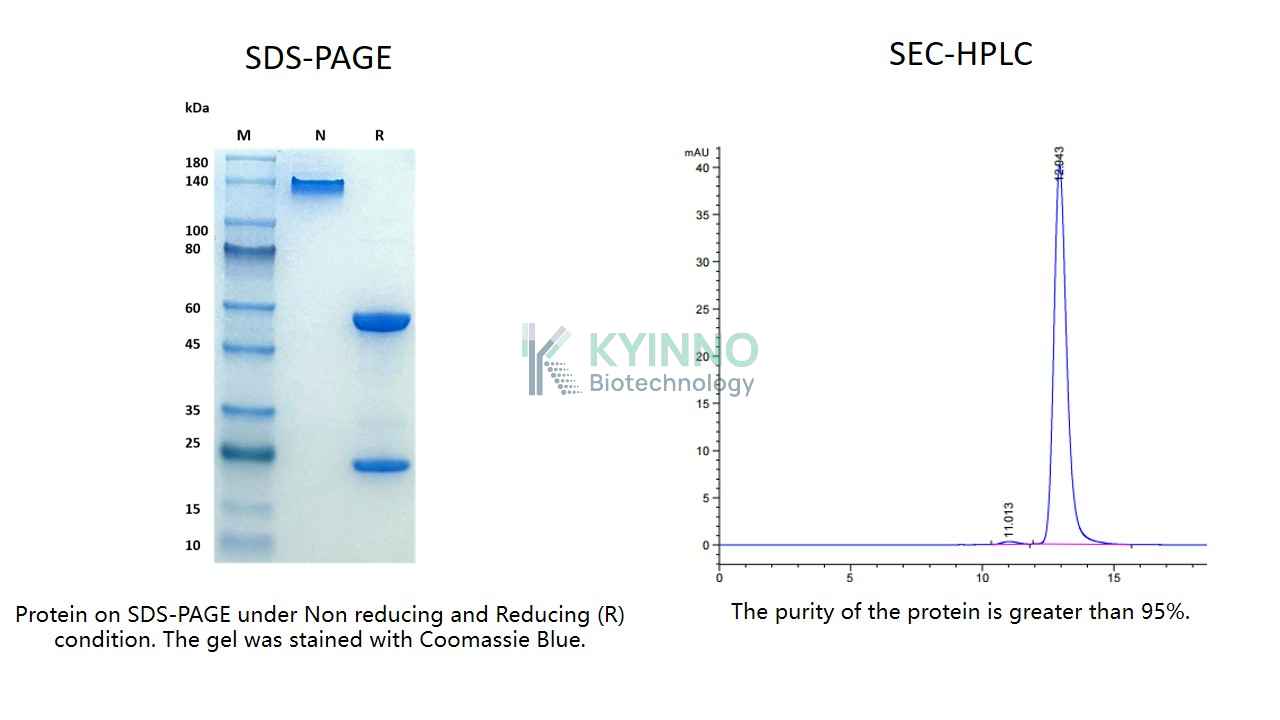
>95% by SDS-PAGE and SEC-HPLC
Validation:
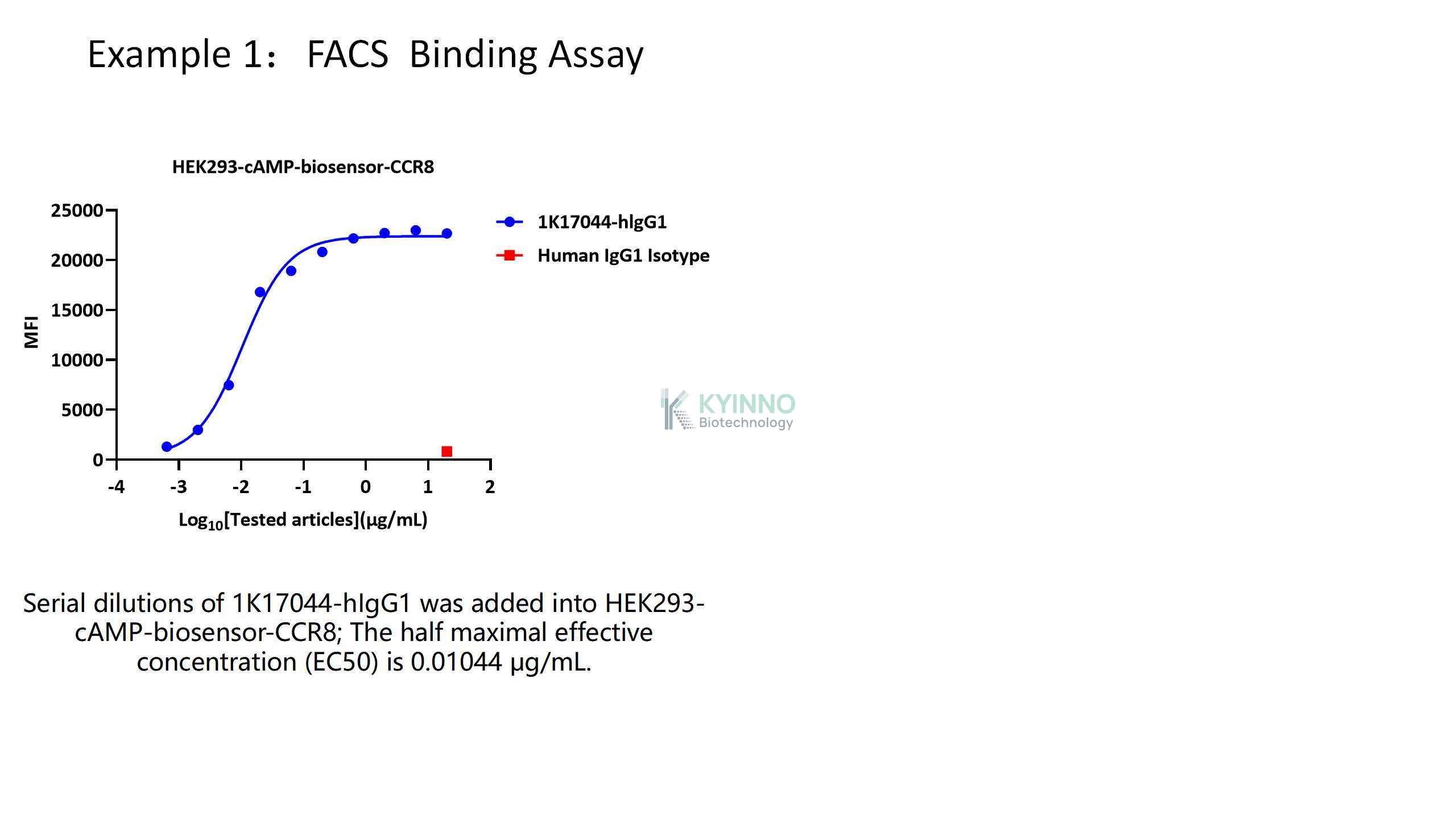
FACS
Endotoxin Level:
<0.2 EU/mg as determined by the LAL method
Sterility:
0.2μm filtered
Storage:
It is recommended that the protein should be aliquoted for optimal storage. Avoid repeated freeze-thaw cycles.
Stability:
Stable for twelve months from date of receipt when stored at -20°C to -80°C; Stored at 2-8°C for one month without detectable loss of activity.

Characterization

Application

References

  1. PB Silver, et al., Retina-specific T regulatory cells bring about resolution and maintain remission of autoimmune uveitis. J Immunol 194, 3011–3019 (2015).
  2. J van Loosdregt, et al., Stabilization of the transcription factor Foxp3 by the deubiquitinase USP7 increases Treg-cell-suppressive capacity. Immunity 39, 259–271 (2013).