Notice: 函数 WP_Styles::add 的调用方法不正确。 The style with the handle "storefront-woocommerce-style" was enqueued with dependencies that are not registered: storefront-style. 请查阅调试 WordPress来获取更多信息。 (这个消息是在 6.9.1 版本添加的。) in /wordpress/wp-includes/functions.php on line 6260

KB-1074

Evinacumab

Home » Evinacumab

Background of Evinacumab

Evinacumab is a recombinant human monoclonal antibody that binds to and inhibits ANGPTL3. ANGPTL3 is a member of the angiopoietin-like protein family that is expressed primarily in the liver and plays a role in the regulation of lipid metabolism by inhibiting lipoprotein lipase (LPL) and endothelial lipase (EL). Evinacumab inhibition of ANGPTL3 leads to reduction in LDL-C, HDL-C, and triglycerides (TG). Evinacumab reduces LDL-C independent of the presence of LDL receptor (LDLR) by promoting very low-density lipoprotein (VLDL) processing and clearance upstream of LDL formation. Evinacumab blockade of ANGPTL3 lowers TG and HDL-C by rescuing LPL and EL activities, respectively.

Specifications

Catalog Number:
KB-1074
Antibody Name:
Evinacumab
Isotype:
Human IgG4-S228P, kappa
FC Muations:
S228P
Target:
ANGPTL3
Species Reactivity:
Human
Host Cell Line:
EXPI CHO
Purification Method:
Affinity purified
Concentration:
>2 mg/mL
Formulation:
50 mM sodium citrate,150mM NaCl,pH5.5
Purity:
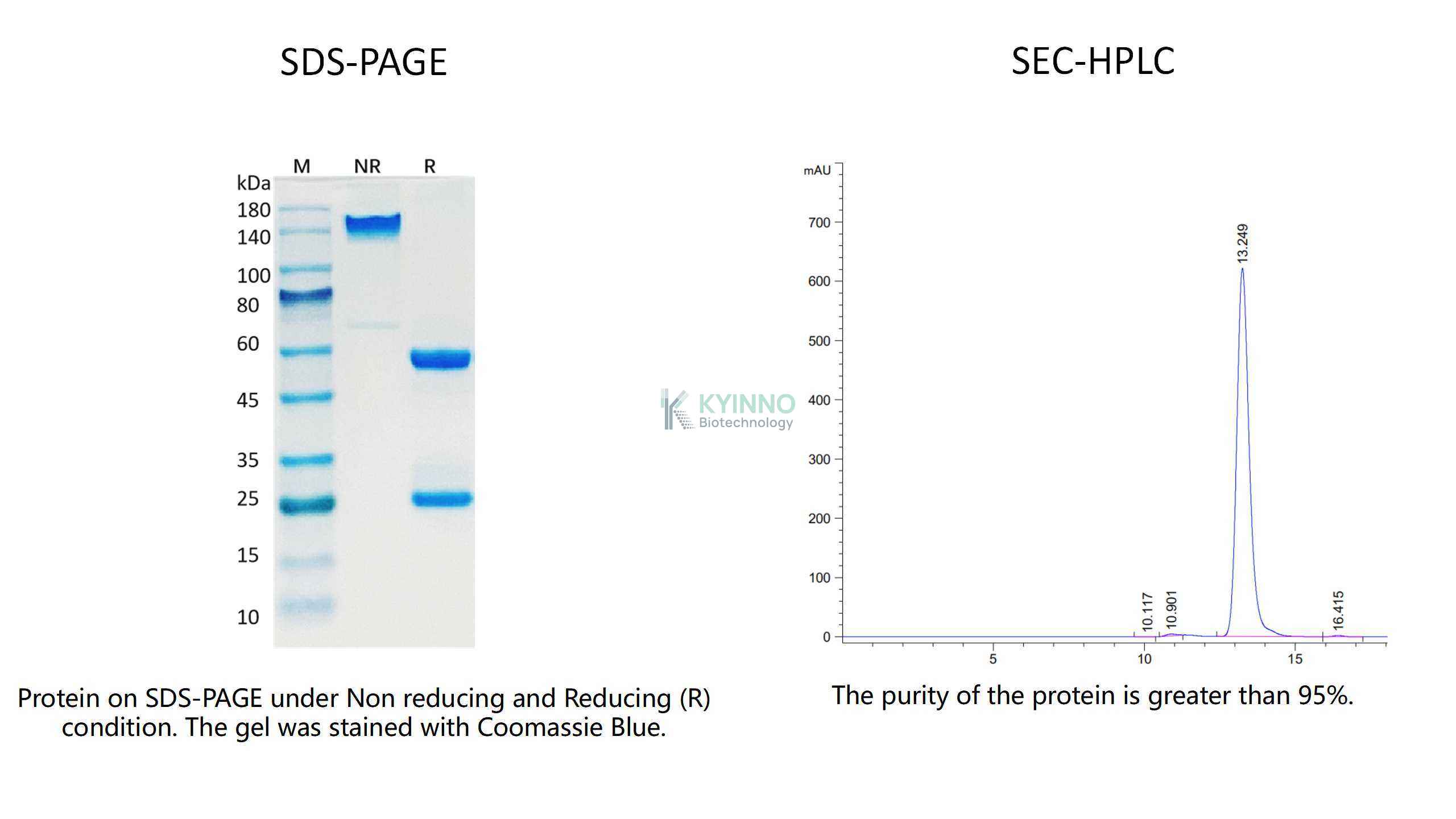
>95% by SDS-PAGE and SEC-HPLC
Validation:
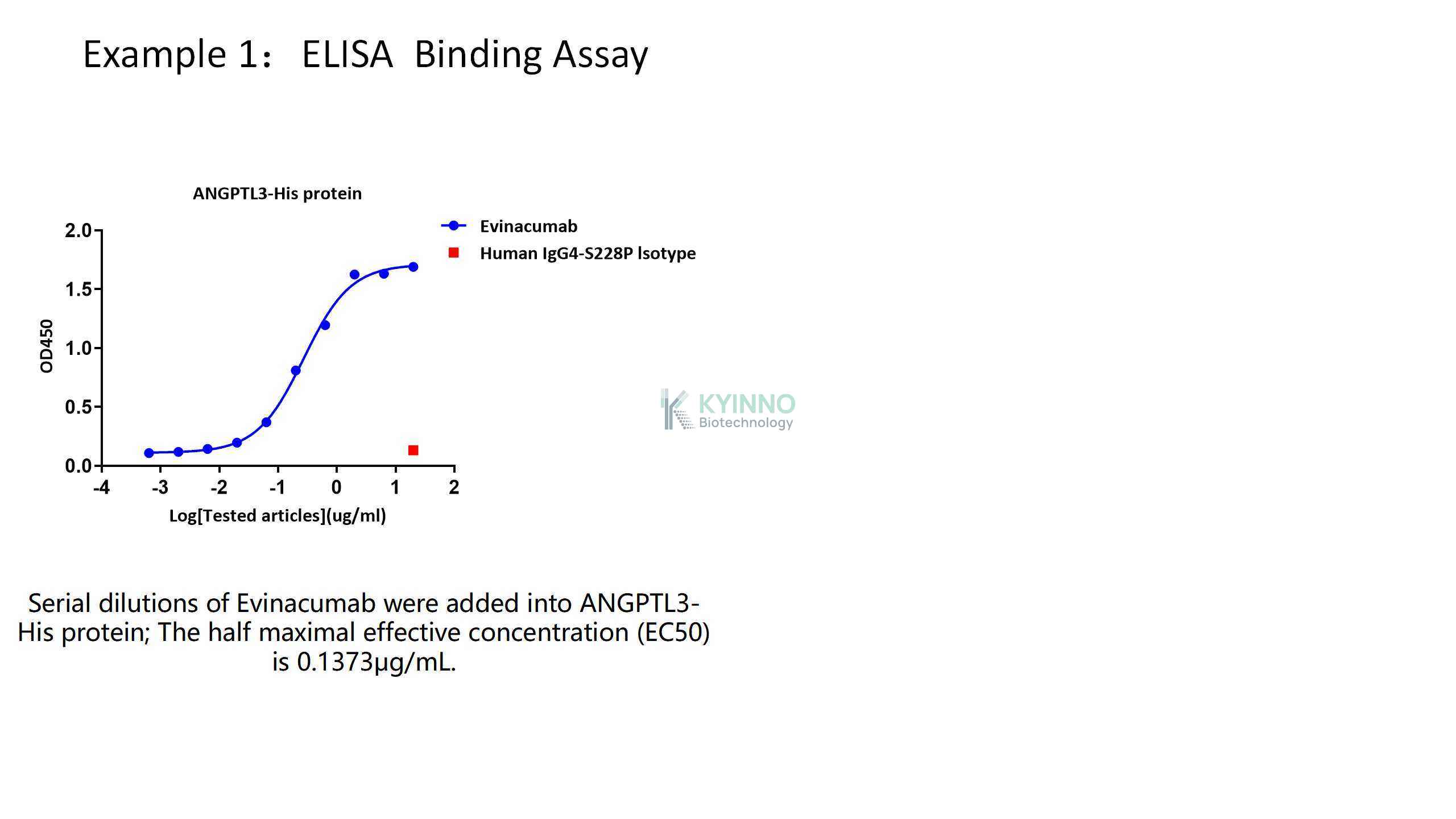
ELISA
Endotoxin Level:
<0.2 EU/mg as determined by the LAL method
Sterility:
0.2μm filtered
Storage:
It is recommended that the protein should be aliquoted for optimal storage. Avoid repeated freeze-thaw cycles.
Stability:
Stable for twelve months from date of receipt when stored at -20°C to -80°C;Stored at 2-8°C for one month without detectable loss of activity.

Characterization

Application

References

  1. Gidding SS, Champagne MA, de Ferranti SD, et al. The agenda for familial hypercholesterolemia: a scientific statement from the American heart association. Circulation. 2015 Dec 1;132(22):2167–2192.
  2. Beheshti SO, Madsen CM, Varbo A, et al. Worldwide prevalence of familial hypercholesterolemia: meta-analyses of 11 million subjects. J Am Coll Cardiol. 2020 May 26;75(20):2553–2566.