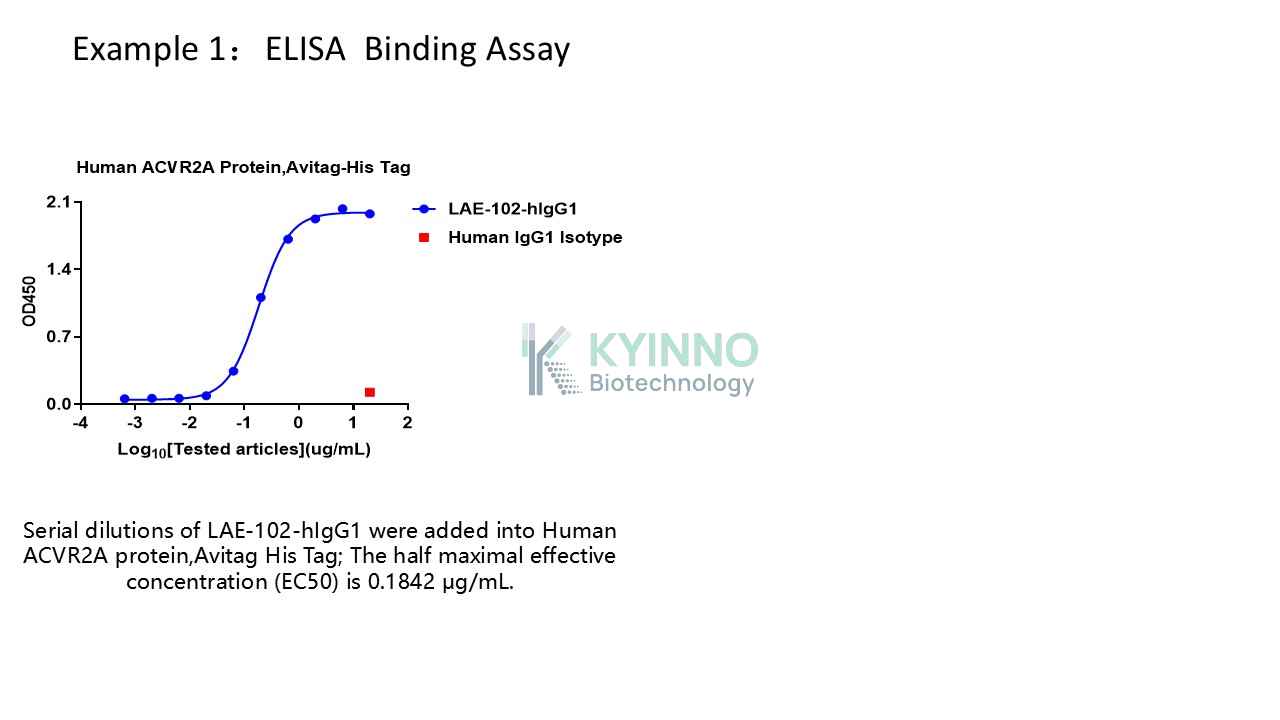
ACVR2A is a type II member of the receptor Serine/Threonine kinases in the TGF β family. It serves as a receptor for Activin A, Activin B, and Inhibin A. Signaling by activins and BMPs is highly promiscuous. Apart from signaling through ALK4/7, the activin type II receptors (ACVR2A and ACVR2B) can also interact with several type I BMP receptors (ALK1/2/3/6), which can in turn form complexes with the type II BMP receptor, BMPRII. Type II receptors phosphorylate and activate type I receptors, which then autophosphorylate and bind and activate SMAD transcriptional regulators. ACVR2A can form complexes with different type I receptors that signal either to Smad2/3 (ALK4) or to Smad1/5/8 (ALK2, ALK3, ALK6). The different type I receptors compete for binding to ACVR2A, and this competition provides a mechanism that balances signaling between Activin A mediated, ALK4 dependent Smad2/3 signaling and BMP mediated ALK2 or ALK3 dependent signaling to Smad1/5/8. In myeloma cells, activin A treatment inhibits BMP 6 and BMP 9 induced activation of SMAD1/5/8 through ACVR2A/ACVR2B/ALK2.