Notice: 函数 WP_Styles::add 的调用方法不正确。 The style with the handle "storefront-woocommerce-style" was enqueued with dependencies that are not registered: storefront-style. 请查阅调试 WordPress来获取更多信息。 (这个消息是在 6.9.1 版本添加的。) in /wordpress/wp-includes/functions.php on line 6260

KB-1089

Lifastuzumab

Home » Lifastuzumab

Background of Lifastuzumab

NaPi2B is a multi-transmembrane type II sodium-dependent phosphate transporter within the SLC34 solute carrier family. It functions in the transport of inorganic phosphate transcellularly and plays a role in phosphate homeostasis. Normally, it is expressed on the apical surfaces of epithelial cells, including type II pneumocytes in the lung, intestinal epithelium, and epithelial lining of the uterus and fallopian tubes. Lifastuzumab vedotin (LIFA, or DNIB0600A), is an anti-NaPi2B ADC utilizing a humanized IgG1 conjugated to an MMAE payload via a cleavable valine-citrulline linker.

Specifications

Catalog Number:
KB-1089
Antibody Name:
Lifastuzumab
Isotype:
Human IgG1,kappa
FC Muations:
WT
Target:
SLC34A2
Species Reactivity:
Human
Host Cell Line:
EXPI CHO
Purification Method:
Affinity purified
Concentration:
>2 mg/mL
Formulation:
50 mM sodium citrate,150mM NaCl,pH5.5
Purity:
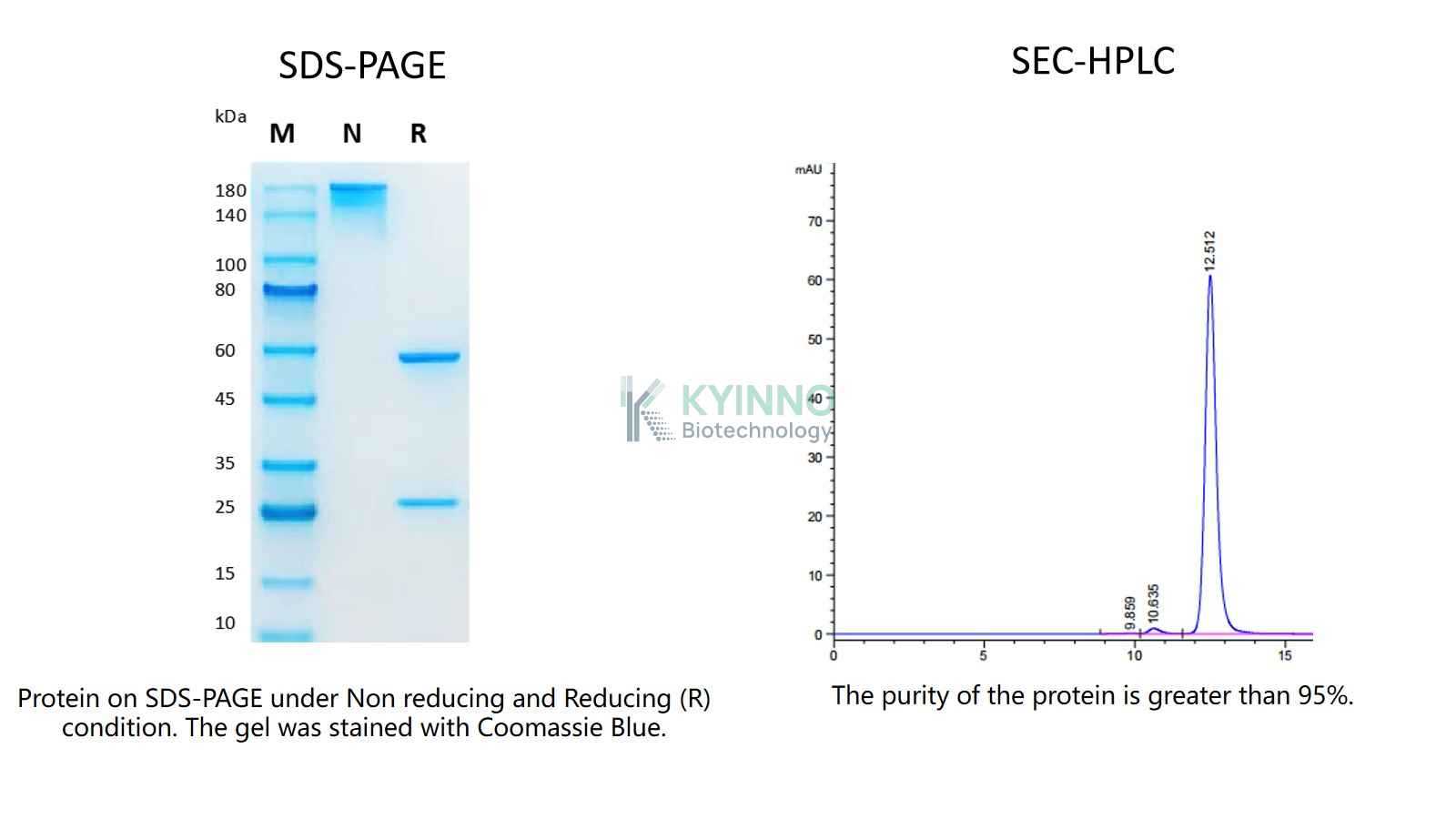
>95% by SDS-PAGE and SEC-HPLC
Validation:
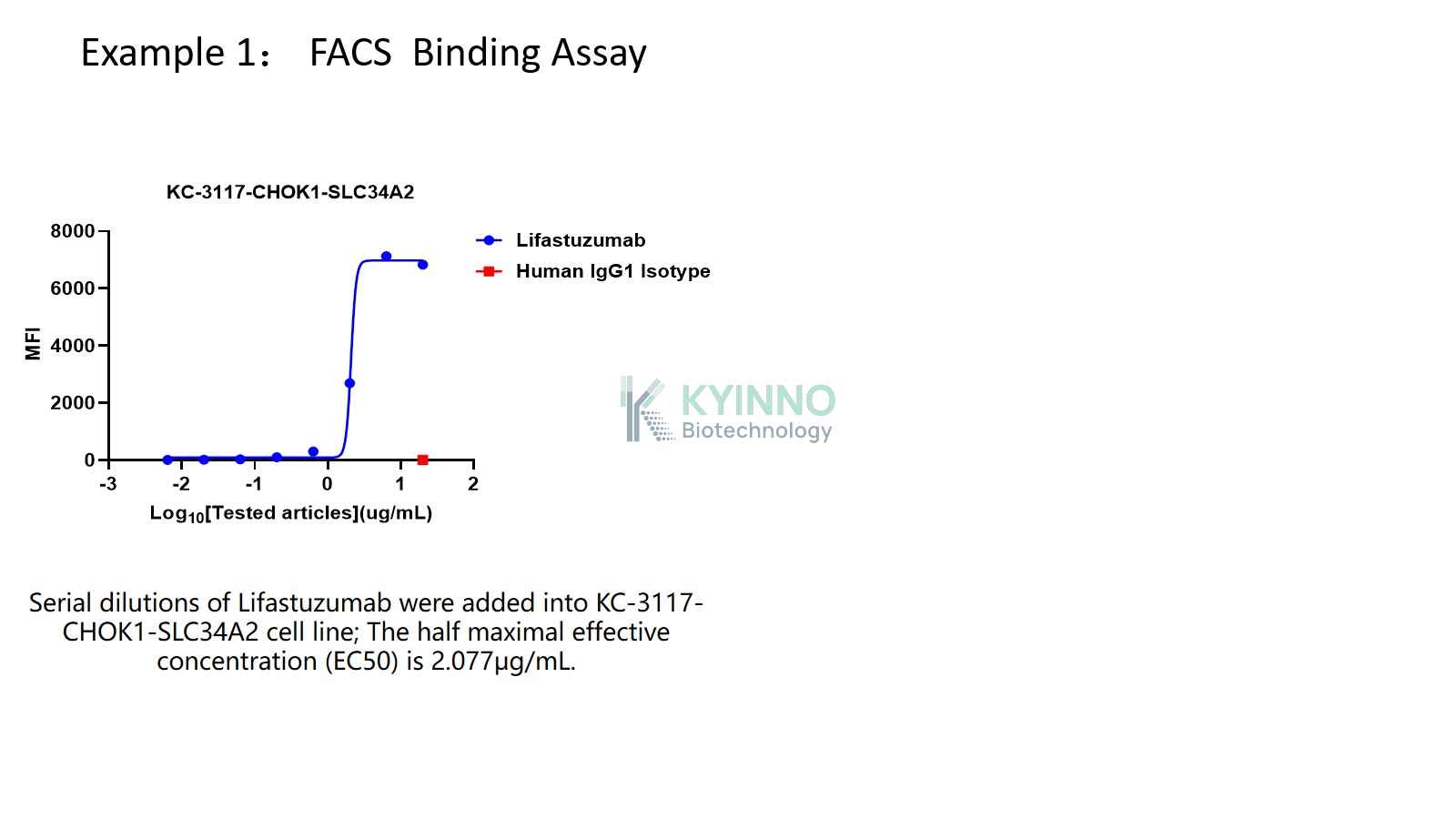
FACS
Endotoxin Level:
<0.2 EU/mg as determined by the LAL method
Sterility:
0.2μm filtered
Storage:
It is recommended that the protein should be aliquoted for optimal storage. Avoid repeated freeze-thaw cycles.
Stability:
Stable for twelve months from date of receipt when stored at -20°C to -80°C; Stored at 2-8°C for one month without detectable loss of activity.

Characterization

Application

References

  1. Banerjee S, et al. Anti-NaPi2b antibody-drug conjugate lifastuzumab vedotin (DNIB0600A) compared with pegylated liposomal doxorubicin in patients with platinumresistant ovarian cancer in a randomized, open-label, phase II study. Ann Oncol. 2018 Apr 1;29(4):917-923.
  2. Torre LA, Trabert B, DeSantis CE, Miller KD, Samimi G, Runowicz CD, et al. Ovarian cancer statistics, 2018. CA Cancer J Clin. 2018;68(4):284–96.