Notice: 函数 WP_Styles::add 的调用方法不正确。 The style with the handle "storefront-woocommerce-style" was enqueued with dependencies that are not registered: storefront-style. 请查阅调试 WordPress来获取更多信息。 (这个消息是在 6.9.1 版本添加的。) in /wordpress/wp-includes/functions.php on line 6260

KB-1323

NGM120-hIgG1

Home » NGM120-hIgG1

Background of NGM120-hIgG1

GFRAL is expressed in a specific region of the hindbrain, partially outside the blood brain barrier, and is believed to initiate signaling through multiple pathways, including the autonomic nervous system. Evidence has shown that serum levels of GDF15 are elevated in patients with a number of tumor types, including non-small cell lung cancer, melanoma, pancreatic, prostate, colorectal, gastric, esophageal and ovarian cancer, and are associated with a worse prognosis in multiple cancers. NGM120 is an antagonist antibody that binds glial cell-derived neurotrophic factor receptor alpha-like (GFRAL) and inhibits growth differentiation factor 15 (GDF15) signaling.

Specifications

Catalog Number:
KB-1323
Antibody Name:
NGM120-hIgG1
Isotype:
Human IgG1, kappa
FC Muations:
Wild Type
Target:
GFRAL
Species Reactivity:
Human
Host Cell Line:
EXPI CHO
Purification Method:
Affinity purified
Concentration:
>2 mg/mL
Formulation:
50 mM sodium citrate,150mM NaCl,pH5.5
Purity:
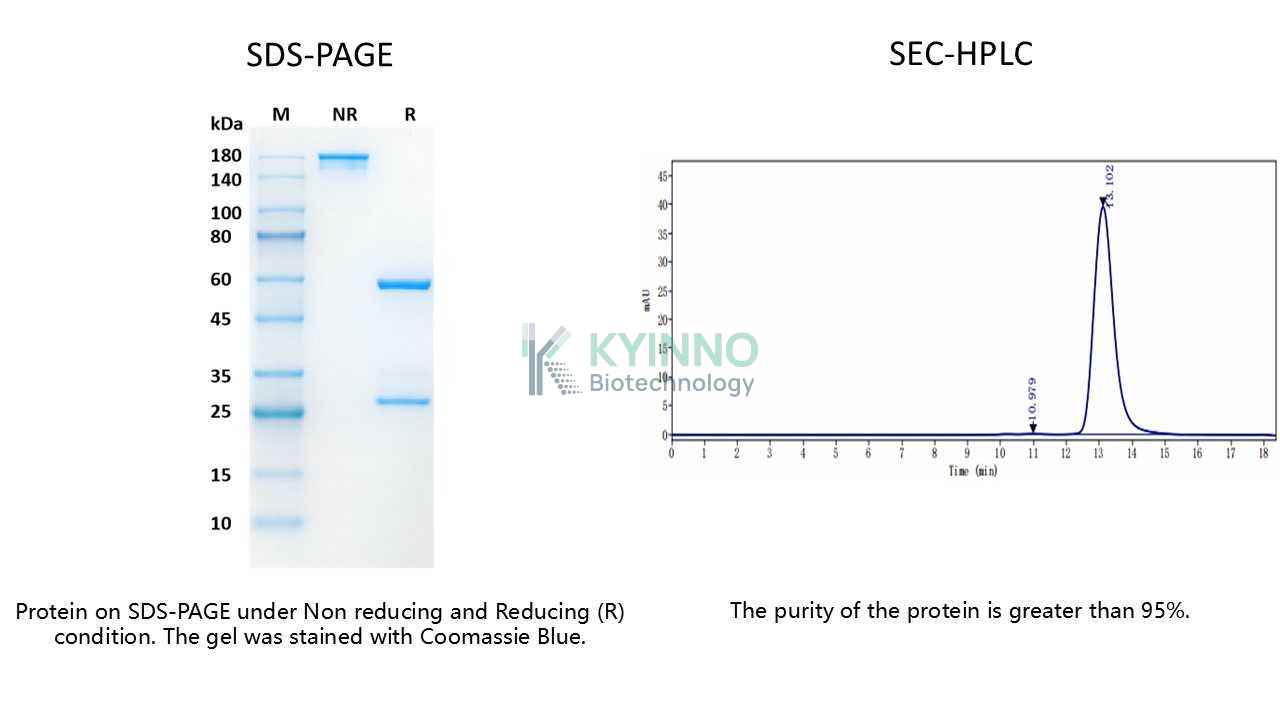
>95% by SDS-PAGE and SEC-HPLC
Validation:
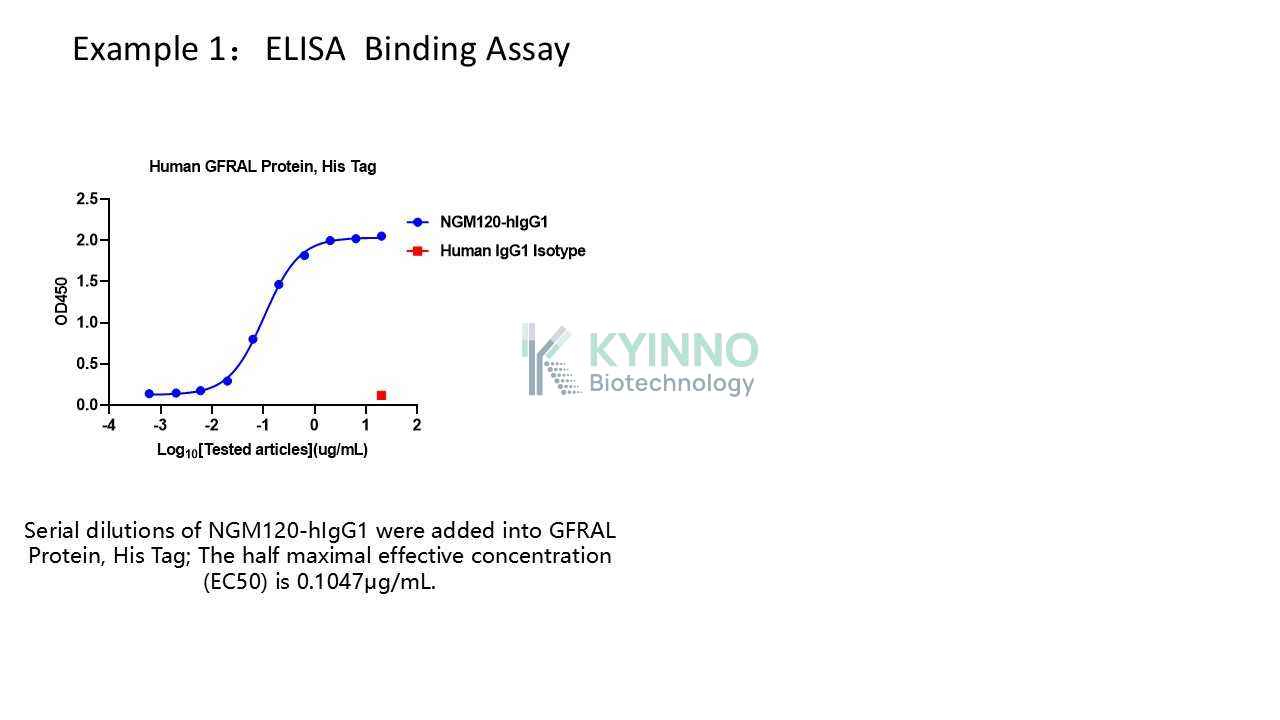
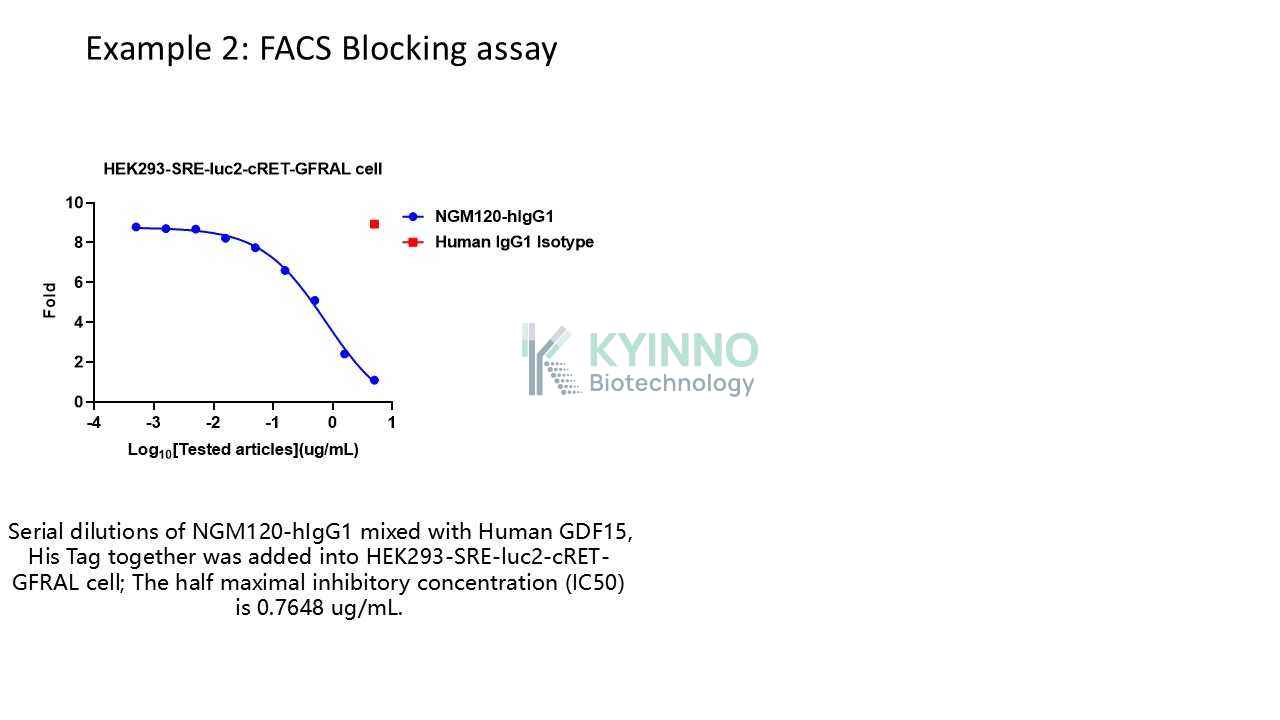
ELISA | FACS
Endotoxin Level:
<0.2 EU/mg as determined by the LAL method
Sterility:
0.2μm filtered
Storage:
It is recommended that the protein should be aliquoted for optimal storage. Avoid repeated freeze-thaw cycles.
Stability:
Stable for twelve months from date of receipt when stored at -20C to -80C; Stored at 2-8C for one month without detectable loss of activity.

Characterization

Application

References

  1. Kempf, T. et al. Growth-differentiation factor-15 improves risk stratification in ST-segment elevation myocardial infarction. Eur. Heart J. 28, 2858–2865 (2007).
  2. Tsai, V.W. et al. Serum levels of human MIC-1/GDF15 vary in a diurnal pattern, do not display a profile suggestive of a satiety factor and are related to BMI. PLoS One 10, e0133362 (2015).