Notice: 函数 WP_Styles::add 的调用方法不正确。 The style with the handle "storefront-woocommerce-style" was enqueued with dependencies that are not registered: storefront-style. 请查阅调试 WordPress来获取更多信息。 (这个消息是在 6.9.1 版本添加的。) in /wordpress/wp-includes/functions.php on line 6260

KB-1282

Ponsegromab

Home » Ponsegromab

Background of Ponsegromab

Ponsegromab (formerly PF 06946860) is a subcutaneously administered, growth differentiation factor 15 (GDF15) inhibitor, being developed by Pfizer, for the treatment of cachexia. This is a secondary reaction, mainly caused by tumor cell products and cytokines released by the body, and manifests as loss of appetite, weight loss, anemia, weakness, exhaustion, etc. About 20% of cancer patients die from cancer cachexia.

Specifications

Catalog Number:
KB-1282
Antibody Name:
Ponsegromab
Isotype:
Human IgG1,kappa
FC Muations:
L234A/L235A/G237A/K447Del
Target:
GDF15
Species Reactivity:
Human
Host Cell Line:
EXPI CHO
Purification Method:
Affinity purified
Concentration:
>2 mg/mL
Formulation:
50 mM sodium citrate,150mM NaCl,pH5.5
Purity:
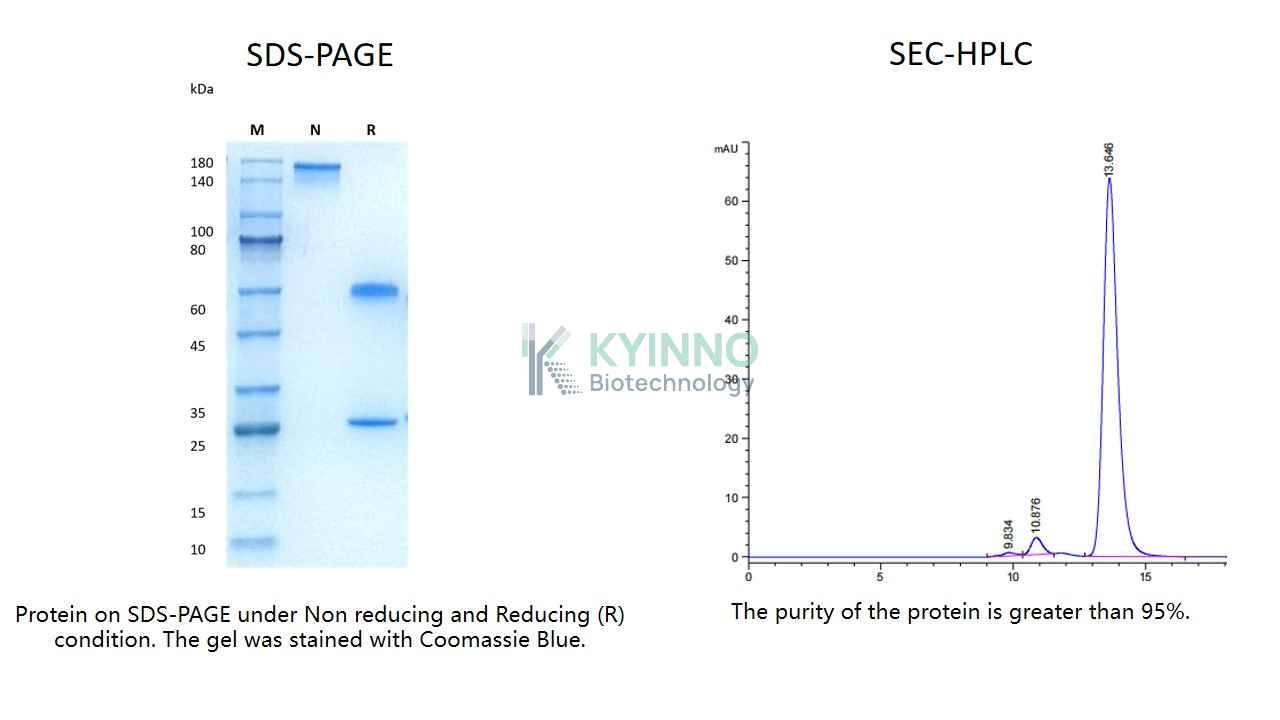
>95% by SDS-PAGE and SEC-HPLC
Validation:
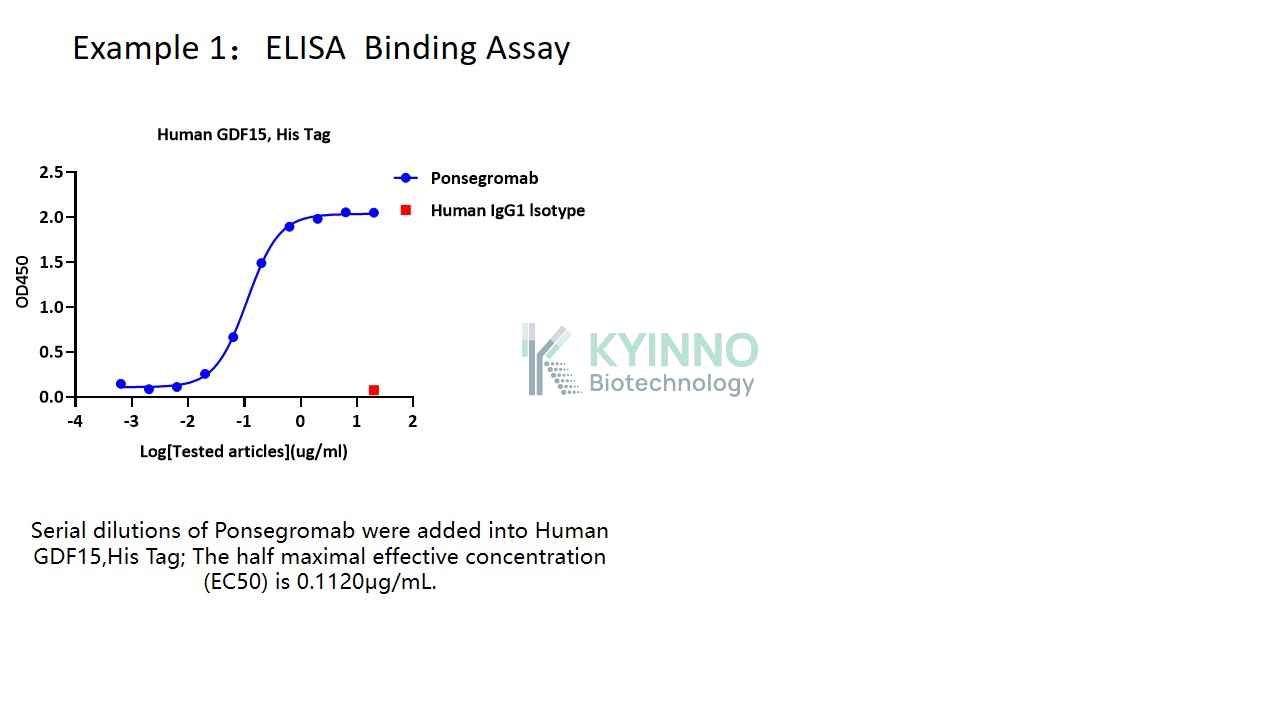
ELISA
Endotoxin Level:
<0.2 EU/mg as determined by the LAL method
Sterility:
0.2μm filtered
Storage:
It is recommended that the protein should be aliquoted for optimal storage. Avoid repeated freeze-thaw cycles.
Stability:
Stable for twelve months from date of receipt when stored at -20°C to -80°C; Stored at 2-8°C for one month without detectable loss of activity.

Characterization

Application

References

  1. Lyall, D. M. et al. Association of body mass index with cardiometabolic disease in the UK Biobank: a Mendelian randomization study. JAMA Cardiol. 2, 882–889 (2017).
  2. Fabbrini, E., Sullivan, S. & Klein, S. Obesity and nonalcoholic fatty liver disease: biochemical, metabolic, and clinical implications. Hepatology 51, 679–689 (2010).
  3. Friedman, S. L., Neuschwander-Tetri, B. A., Rinella, M. & Sanyal, A. J. Mechanisms of NAFLD development and therapeutic strategies. Nat. Med. 24, 908–922 (2018).