Notice: 函数 WP_Styles::add 的调用方法不正确。 The style with the handle "storefront-woocommerce-style" was enqueued with dependencies that are not registered: storefront-style. 请查阅调试 WordPress来获取更多信息。 (这个消息是在 6.9.1 版本添加的。) in /wordpress/wp-includes/functions.php on line 6260

KB-1200

REGN7075-EGFR-hIgG1

Home » REGN7075-EGFR-hIgG1

Background of REGN7075-EGFR-hIgG1

EGFR (Epidermal Growth Factor Receptor) is a protein that plays a crucial role in the regulation of cell growth, survival, proliferation, and differentiation. It is a member of the ErbB family of receptor tyrosine kinases and is primarily involved in signaling pathways that control cell division and survival. EGFR is activated by binding to its ligands, such as epidermal growth factor (EGF), leading to receptor dimerization and activation of downstream signaling pathways, including the MAPK and PI3K pathways, which promote cell proliferation. Due to its significant role in cancer biology, EGFR has become a major target for cancer therapies.

Specifications

Catalog Number:
KB-1200
Antibody Name:
REGN7075-EGFR-hIgG1
Isotype:
Human IgG1, kappa
FC Muations:
Wild Type
Target:
EGFR
Species Reactivity:
Human
Host Cell Line:
EXPI CHO
Purification Method:
Affinity purified
Concentration:
>2 mg/mL
Formulation:
20mM sodium citrate,150mM NaCl, pH5.5
Purity:
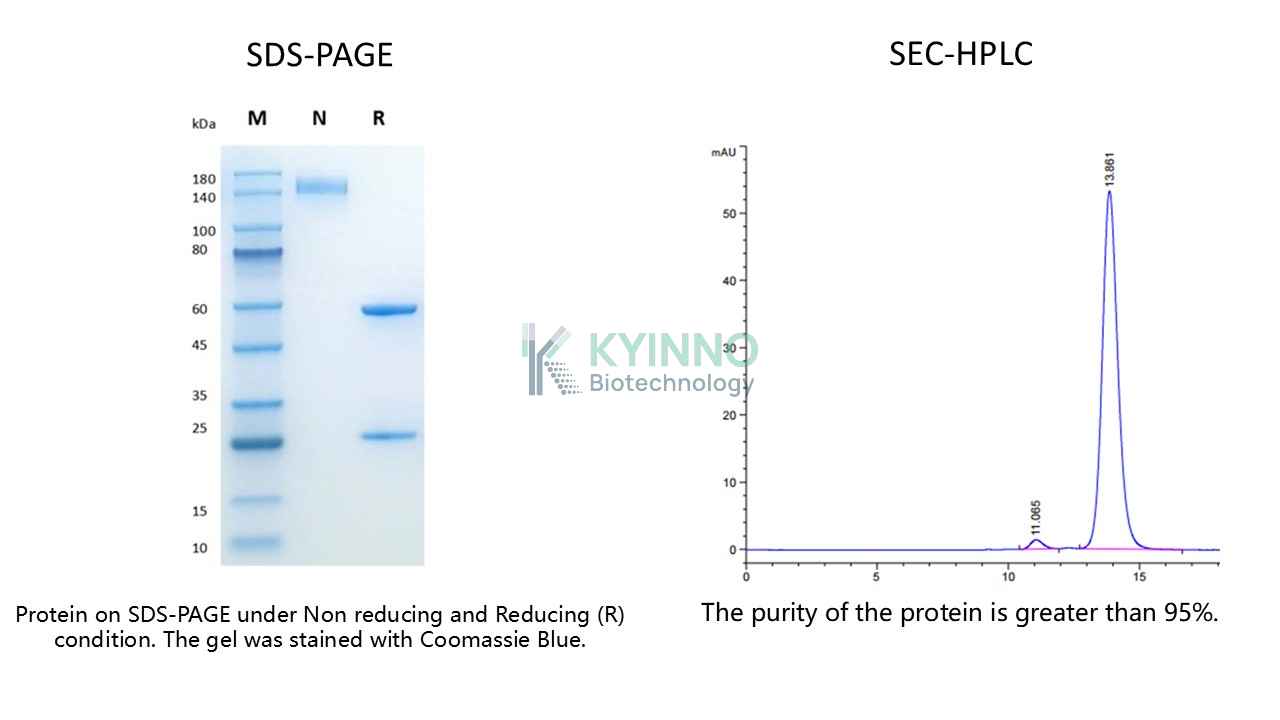
>95% by SDS-PAGE and SEC-HPLC
Validation:
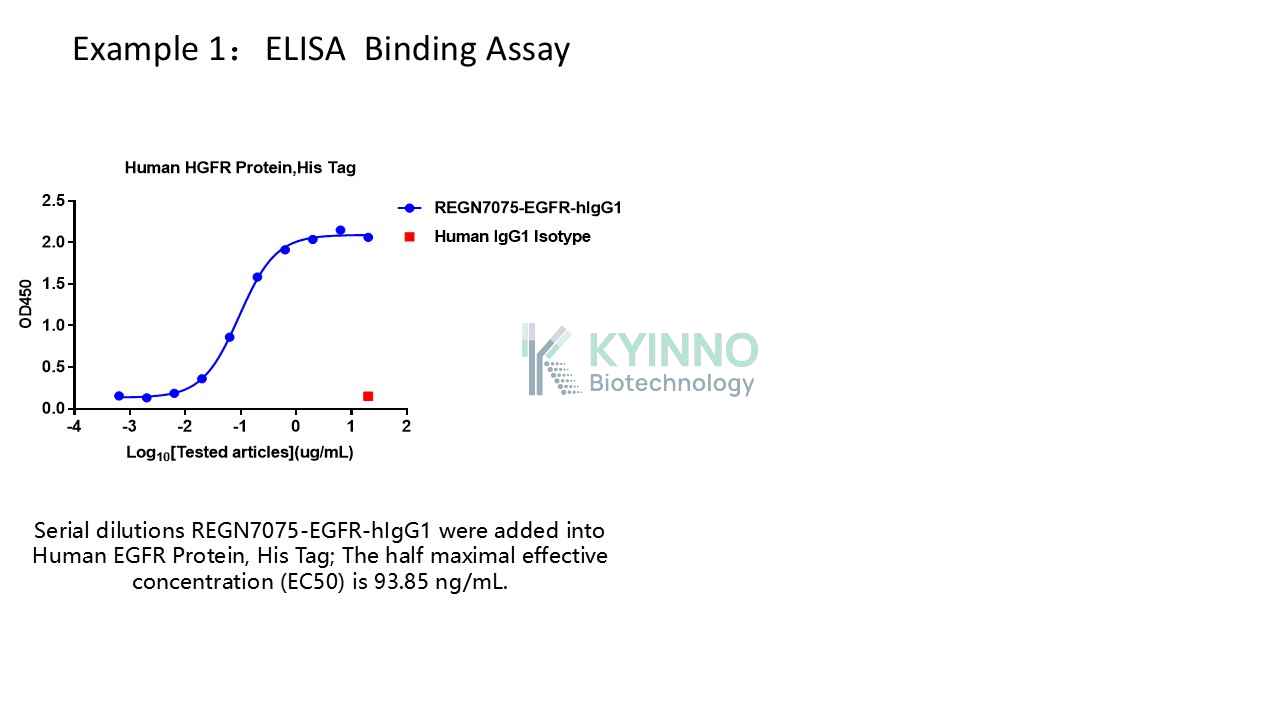
ELISA
Endotoxin Level:
<0.2EU/mg as determined by the LAL method
Sterility:
0.2μm filtered
Storage:
It is recommended that the protein should be aliquoted for optimal storage. Avoid repeated freeze-thaw cycles.
Stability:
Stable for twelve months from date of receipt when stored at -20°C to -80°C;Stored at 2-8°C for one month without detectable loss of activity.

Characterization

Application

References

  1. Tao R.-H., Maruyama I.N. All EGF(ErbB) receptors have preformed homo- and heterodimeric structures in living cells. J. Cell Sci. 2008;121:3207–3217.
  2. Hoffmann I. Activation of ErbB2 receptor tyrosine kinase supports invasion of endothelial cells by Neisseria meningitidis. J. Cell Biol. 2001;155:133–144.
  3. Torp S.H. Epidermal growth factor receptor expression in human gliomas. Cancer Immunol. Immunother. 1991;33:61–64.
  4. Oda Y. Expression of growth factors and their receptors in human osteosarcomas. Immunohistochemical detection of epidermal growth factor, platelet-derived growth factor and their receptors: its correlation with proliferating activities and p53 expression. Gen. Diagn. Pathol. 1995;141:97–103.
  5. Donnenberg A.D. The cell-surface proteome of cultured adipose stromal cells. Cytometry. 2015;87:665–674.
  6. Scheving L.A. Loss of hepatocyte ERBB3 but not EGFR impairs hepatocarcinogenesis. Am. J. Physiol. Gastrointest. Liver Physiol. 2015;309:G942–G954.
  7. Brea M.S. Epidermal growth factor receptor silencing blunts the slow force response to myocardial stretch. J. Am. Heart Assoc. 2016;5:e004017.