Notice: 函数 WP_Styles::add 的调用方法不正确。 The style with the handle "storefront-woocommerce-style" was enqueued with dependencies that are not registered: storefront-style. 请查阅调试 WordPress来获取更多信息。 (这个消息是在 6.9.1 版本添加的。) in /wordpress/wp-includes/functions.php on line 6260

KB-1097

RG6333-CD28-hIgG4-S228P

Home » RG6333-CD28-hIgG4-S228P

Background of RG6333-CD28-hIgG4-S228P

CD28 signals play a key role in many T cell processes, including cytoskeletal remodeling, production of cytokines, survival, and differentiation. A strong CD28 signal, thus, indicates to the T cell that there is indeed a threat and that an immune response is urgently required. CD28 provides signals during T cell activation which are required for production of interleukin 2 and other cytokines and chemokines, and it has also been implicated in the regulation of T cell anergy and programmed T cell death.

Specifications

Catalog Number:
KB-1097
Antibody Name:
RG6333-CD28-hIgG4-S228P
Isotype:
Human IgG4-S228P, kappa
FC Muations:
Wild Type
Target:
CD28
Species Reactivity:
Human
Host Cell Line:
EXPI CHO
Purification Method:
Affinity purified
Concentration:
>2 mg/mL
Formulation:
50 mM sodium citrate,150mM NaCl,pH5.5
Purity:
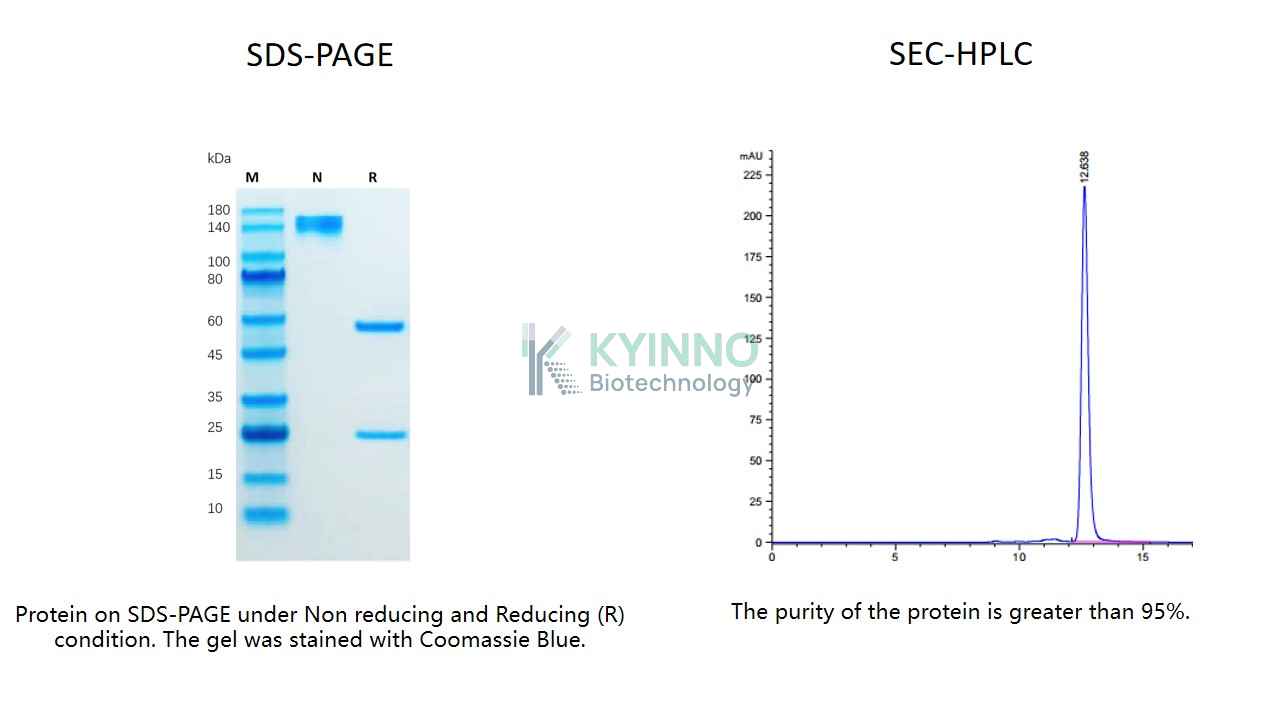
>95% by SDS-PAGE and SEC-HPLC
Validation:
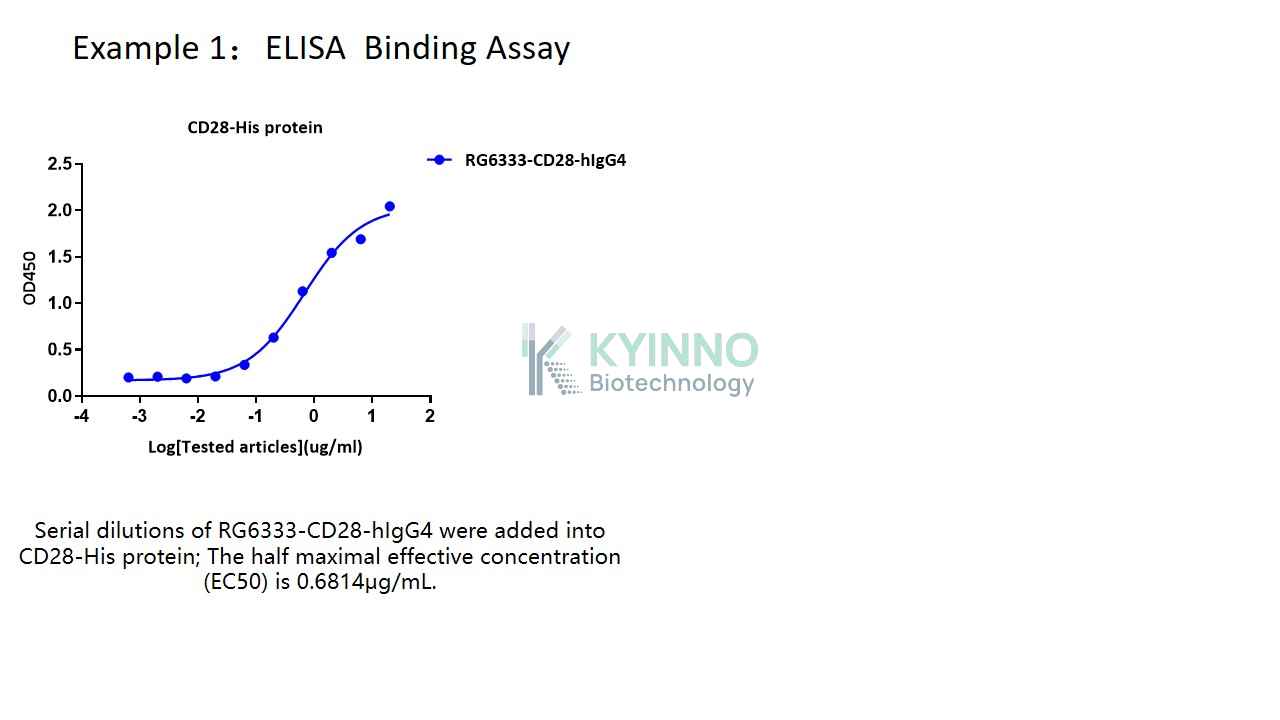
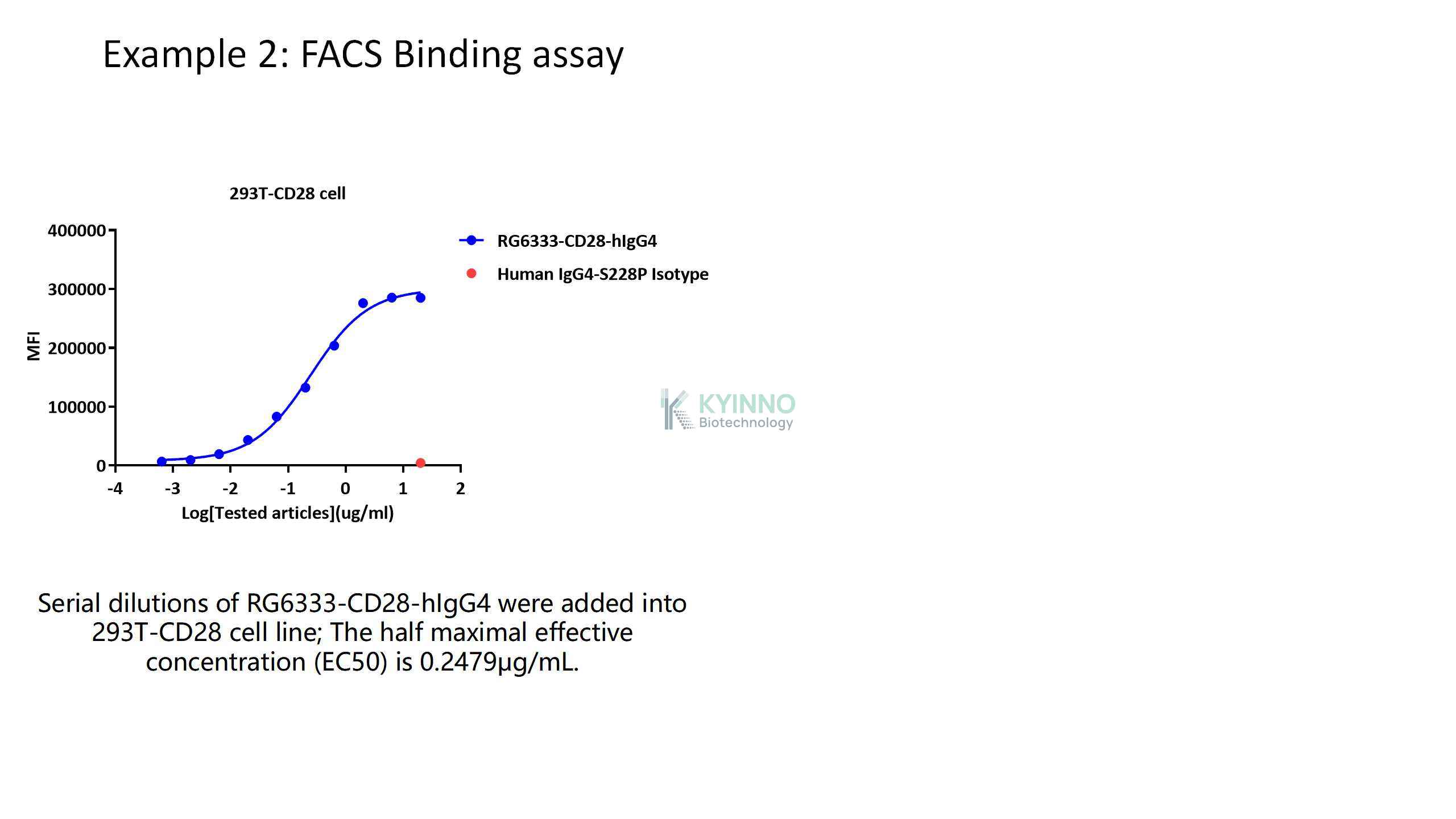
ELISA | FACS
Endotoxin Level:
<0.2 EU/mg as determined by the LAL method
Sterility:
0.2μm filtered
Storage:
It is recommended that the protein should be aliquoted for optimal storage. Avoid repeated freeze-thaw cycles.
Stability:
Stable for twelve months from date of receipt when stored at -20°C to -80°C; Stored at 2-8°C for one month without detectable loss of activity.

Characterization

Application

References

  1. Esensten JH, Helou YA, Chopra G, Weiss A, Bluestone JA. CD28 Costimulation: From Mechanism to Therapy. Immunity. 2016 May 17;44(5):973-88.
  2. Beyersdorf N, Kerkau T. CD28-Kostimulation und Checkpointblockade in T-Zellen [CD28 costimulation and checkpoint inhibition in T cells]. Internist (Berl). 2020 Jul;61(7):652-659. German.
  3. Ward SG. CD28: a signalling perspective. Biochem J. 1996 Sep 1;318 ( Pt 2)(Pt 2):361-77.