Notice: 函数 WP_Styles::add 的调用方法不正确。 The style with the handle "storefront-woocommerce-style" was enqueued with dependencies that are not registered: storefront-style. 请查阅调试 WordPress来获取更多信息。 (这个消息是在 6.9.1 版本添加的。) in /wordpress/wp-includes/functions.php on line 6260

KB-1397

SIM0235-hIgG1

Home » Antibodies » SIM0235-hIgG1

Background of SIM0235-hIgG1

SIM0235 represents a humanized immunoglobulin G1 (IgG1) monoclonal antibody with a specific affinity toward and inhibition of TNFR2. This antibody showcases the ability to effectively eliminate TNFR2-expressing immunosuppressive cells, encompassing regulatory T cells (Tregs) and bone marrow-derived suppressor cells. Its mechanism involves the utilization of antibody-dependent cellular cytotoxicity (ADCC), antibody-dependent cellular phagocytosis (ADCP), and other Fc-receptor functions. Moreover, this remarkable molecule demonstrates the capability to impede TNFR2 activation by endogenous tumor necrosis factor (TNF), thereby exerting influence over the immunosuppressive function and proliferation typically mediated by TNFR2. Consequently, this augmentation serves to bolster the body's immune response against tumors. Notably, SIM0235 exhibits an additional proficiency in binding to TNFR2 present on the surface of tumor cells, subsequently effecting their direct elimination.

Specifications

Catalog Number:
KB-1397
Antibody Name:
SIM0235-hIgG1
Isotype:
Human IgG1,kappa
FC Muations:
Target:
TNFR2
Species Reactivity:
Human
Host Cell Line:
EXPI CHO
Purification Method:
Affinity purified
Concentration:
>2 mg/mL
Formulation:
50 mM sodium citrate,150mM NaCl,pH5.5
Purity:
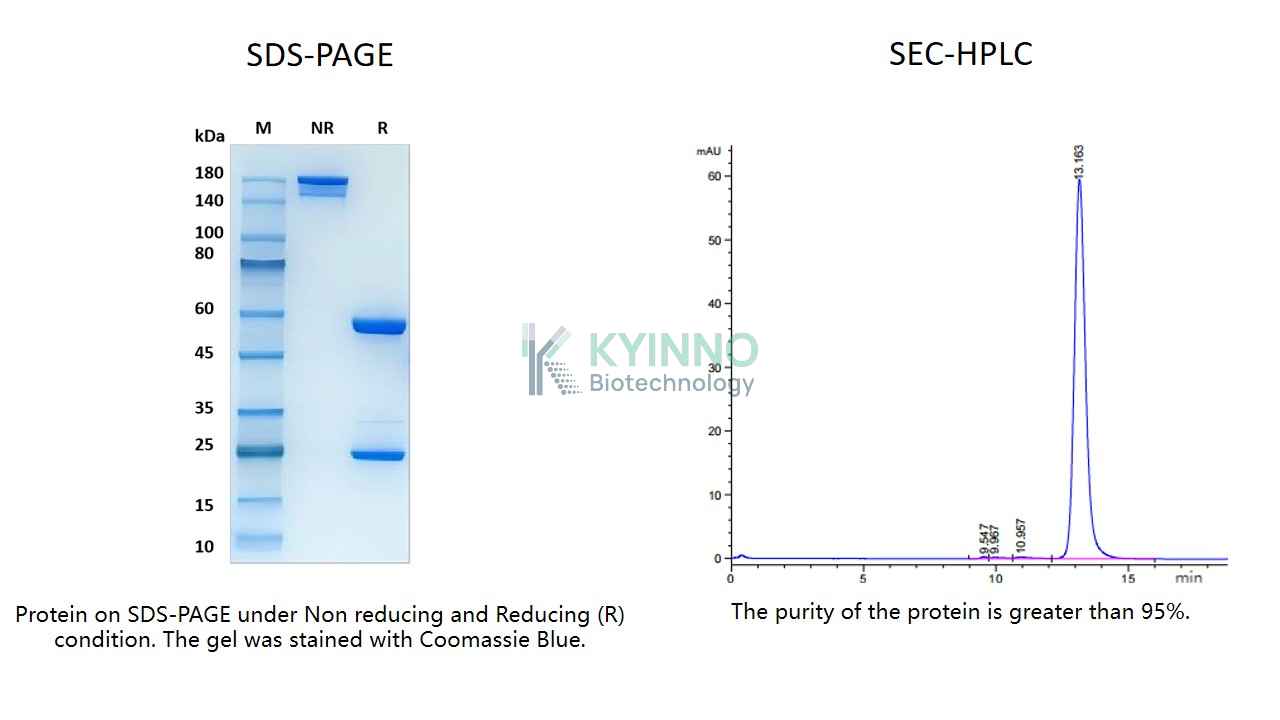
>95% by SDS-PAGE and SEC-HPLC
Validation:
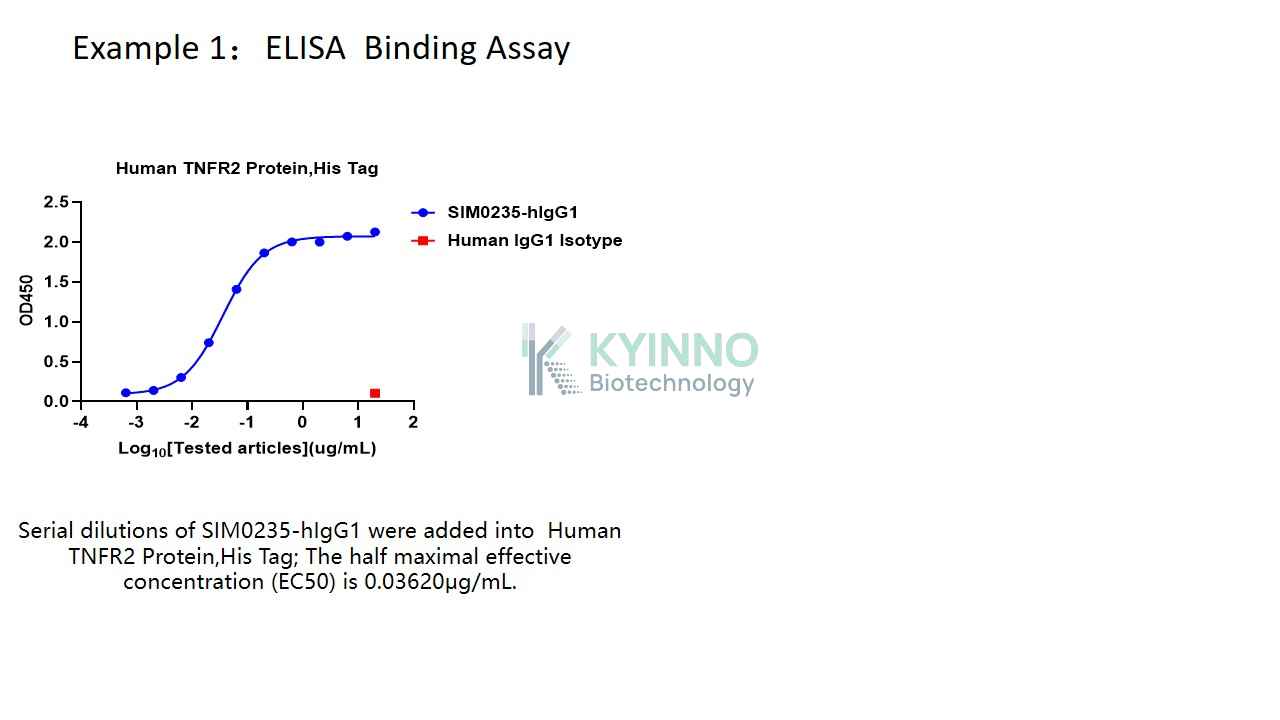
ELISA
Endotoxin Level:
<0.2 EU/mg as determined by the LAL method
Sterility:
0.2μm filtered
Storage:
It is recommended that the protein should be aliquoted for optimal storage. Avoid repeated freeze-thaw cycles.
Stability:
Stable for twelve months from date of receipt when stored at -20°C to -80°C; Stored at 2-8°C for one month without detectable loss of activity.

Characterization

Application

References

  1. Rauert H, Wicovsky A, Muller N, Siegmund D, Spindler V, Waschke J, et al.. Membrane Tumor Necrosis Factor (TNF) Induces P100 Processing via TNF Receptor-2 (TNFR2). J Biol Chem (2010) 285:7394–404.
  2. Shamdani S, Uzan G, Naserian S. TNFalpha-TNFR2 Signaling Pathway in Control of the Neural Stem/Progenitor Cell Immunosuppressive Effect: Different Experimental Approaches to Assess This Hypothetical Mechanism Behind Their Immunological Function. Stem Cell Res Ther (2020) 11:307.